by: Dianne van Eck
Hello friends and colleagues
This is my first update since late last year. It seems such a long time ago now! So much has happened, across the sector and also within DVE. You’ll read some sector news below, followed by the latest DVE news. My bit of exciting personal news is that during January, Jo, Tommy and I went on a Disney Cruise for 4 days to Sydney and out to sea. Despite some of my initial misgivings (a boat full of children!) I had a relaxing time gazing out to the ocean for a few days, enjoying themed dinners each night, theatre shows for the kids and lots of fun and games. It was the last time Disney were cruising in Australia so we were lucky to get tickets. Now onto sector news…..
Sector Update
It’s certainly been an interesting start to the year for the Higher Education sector in Australia. The sector has dominated the media in this first quarter. Some highlights below from Andrew Norton:
- University applications for the 2026 academic year saw a 4.6% increase (except for WA), with offers up 2.5%, indicating a strong recovery in domestic demand. This will assist many universities who saw a downturn in student numbers in 2025.
- Student preferences shifted toward health, science, and teaching. Undergraduate offers for social work rose by 19%, engineering by 9%, science by 8%, and teaching/nursing both increased by 6%
- The Australian Government allocated an extra 9,500 domestic places for 2026 to support increased university participation in suburban and regional areas, targeting the Accord goal of 80% tertiary attainment by 2050.
A Feb 2026 report by Universities Australia highlighted that over 40% of Australian universities have been in deficit for most of the past five years. This will lead to further drives to reduce costs. The government set a National Planning Level (NPL) of 295,000 new international student commencements for 2026. While higher than 2025, this managed system is still creating uncertainty for many institutions, particularly those heavily reliant on international student fees.
In January 2026, the Australian Government introduced demand-driven Needs-based Funding (NBF). NBF provides per-student funding contributions for First Nations Australian students, students with disability, and low SES students, along with students studying at regional campuses. This will likely require further redirection of resources and processes by student administration teams across the country.
Australian Tertiary Education Commission (ATEC)

The Australian Tertiary Education Commission (ATEC) was established in March 2026. It is an independent body which aims to manage the growth of the higher education system as well as implement new governance principles. Universities Australia (UA) worked hard to improve the bill noting ‘The amended bill boosts the ATEC’s independence, improves resourcing and sharpens its focus on research’. The ATEC Acting Interim Commissioners have been appointed, led by Professor Barney Glover as Acting Interim Chief Commissioner.
The key role of ATEC is ‘to be an independent steward for the higher education system, tasked with creating a better and fairer tertiary education system that delivers for students and on national economic and social objectives’. The key areas of focus for ATEC are equity and participation, and sector collaboration, particularly between VET and Higher Education. Partnerships with First Nations people and organisations are also a key priority.
Artificial Intelligence (AI) in Higher Education
Change is a constant – a phrase I have been using for two decades now. In recent years AI has become a dominant theme in many conversations. It is seen by many as an excellent opportunity to improve processes and systems. Others see it as a threat to individual thought, equity and self-discipline. During the past few years, AI has been considered largely in the teaching and learning area in relation to student learning and particularly assessment.
Recently there has been an increase in information about how AI will impact on organisations due to the rise of generative AI such as Chat GPT. Chat GPT can easily turn a difficult or cumbersome task into a much easier task. It can be the starting point for further creative thinking. It changes a ‘blank slate’ to ‘an early draft’. This can have a tremendous impact on many of the mundane and tedious tasks undertaken by staff to achieve a successful student transition from admissions to graduation.
Many large organisations are using AI to replace time consuming manual activities on a massive scale. This will impact how work is performed, improve systems and processes and hopefully improve the experience for students, delivering information to them just in time, faster and more focused to their needs.
Rather than fear AI, we need to embrace it, use it responsibility, equitably and transparently to support our processes. TEQSA has provided guidelines on the use of AI for students. I also commend to you the article published by the Australian Centre for Student Equity and Success ‘Australian Framework for Artificial Intelligence in Higher Education.
Improving the Student Experience whilst on Placement
For the past 18 years, DVE has focused many, if not all of their projects on improving the student experience in one way or another. Whether it be leading or supporting organisational change, reviewing and improving business processes or developing and implementing a new technology solution, we have seen it all! We have found ourselves focussing on placement processes across many institutions and done many process improvement and implementation projects with a system agnostic view, working with whatever system is in place or implementing and improving our own system
With the news that Lumivero is discontinuing the use of SONIA the Australian higher ed sector is likely to be the most significantly impacted. With SONIA having originally being designed and built in Australia, it had a focus on the Australian sector’s needs. No international system has been able to replicate that.
We are here to support our colleagues in the Australian HE sector through process improvement, requirements gathering or where appropriate, implementing our own system to drive best practice placement processes in universities.
If you’d like to talk more about this or get a demo of our system, please reach out directly to Jo jo.schneider@dvesolutions.com.au.
DVE Webinars
The DVE team have been working hard delivering a suite of webinars over the past 6 months. Recent webinars include:
- Business Continuity Planning & Risk Management (March 2026)
- Clarity vs Change (April 2026)
- Risk Management and Business Continuity in Higher Education
- Leading Down – Managing Teams Through Change
- Shifting Sands: How technology is changing the way students choose a university. A conversation with Rob Malicki.
- What You Need to Know to Register as an Institute of Higher Education in Australia
DVE Papers
Upcoming Conferences
- Student Success Conference (STARS) to be held at the University of Sunshine Coast from 29 June to 1 July. Keynote speaker will be Professor Kerri-Lee Krause (PhD, GAICD PFHEA, FSRHE), Chief Commissioner TEQSA
- ATEM Admissions, Scholarships and Credit Conference to be held at RMIT from 20 – 22 May.
- ATEM Graduations Conference ‘Beyond the Stage: Innovation and Impact in Graduations’ to be held at University of Queensland Campus, St Lucia Campus, Brisbane from 4 – 5 June.
- ATEM Examinations Network to be held at Newcastle from 18 to 20 August.
- Heads of Student Admin (HoSA) conference to be held at Brisbane from 26 – 28 August.
- ATEM Ignite Conference to be held in Sydney from 27 to 30 September.
- WIL Australia Conference 2026 – WIL Impact: Partnering for Scalable Practice, Adelaide from 18-20 October


Social History Museum
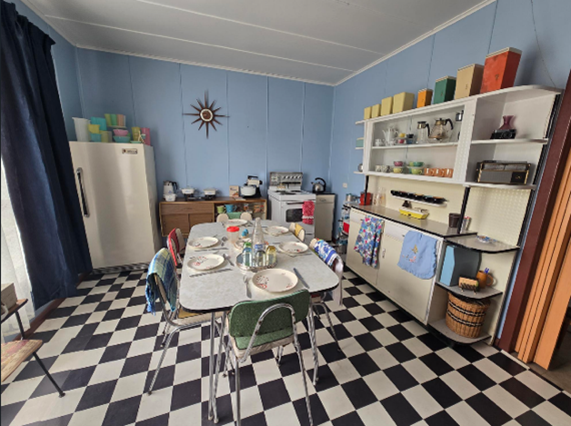
Personally, I’ve been spending a lot of time with my friends, particularly over the December and January months. It’s also been a time to work further on my social history museum, which is my collection of everyday things from the 1940s through to the 1980s. I have small collections of many things including cameras, radios, telephones, typewriters, kitchenalia, tins, bottles, office technology, sewing machines and vacuum cleaners.
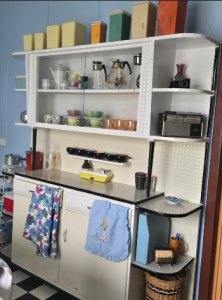 I have been setting up a small museum ‘The Museum of Everyday Things’ over the past 10 years with a goal to have collections of items, as well as specific rooms set up showcasing various decades. Last
 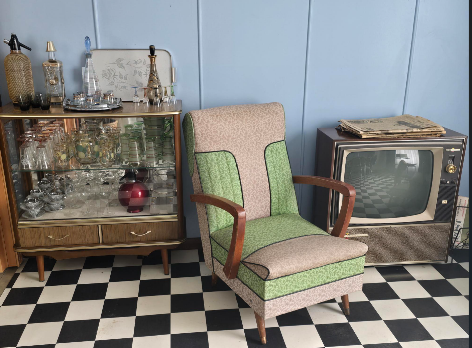 weekend I achieved a small goal with the partial set up of my 1960s kitchen (see pic). I still need to research items to add descriptors and wall imagery but you should ‘get the vibe’ from these pictures.
Fun with Tommy
Last but not least, my favourite topic, Tommy. Since we last connected, we have shared Christmas and Easter with him. As with all 3 ½ year olds, these celebrations are a lot of fun, coupled with the giving and receiving of gifts and or chocolate. There was an abundance of this last week as Tommy’s extended family gifted lavishly. I don’t think I’ve ever seen so many chocolate eggs! , Tommy is a generous little boy.
On Easter Monday, when we visited the Meadows Easter Fair in the Adelaide Hills, Tommy took a bag full of eggs to give ‘to the kids’. (He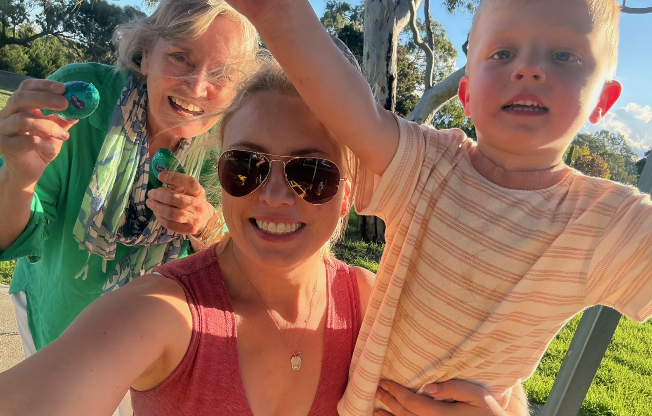 often wants to gift his unwanted toys ‘to the kids’ too). At the fair, as he walked around and saw some small children he offered them a chocolate egg. Several children were crying and he wanted to help them feel better. Chocolate eggs worked wonders! Crying children stopped crying and parents were grateful. Hopefully they will pay that small child’s kindness forward one day.
In the evening as he went to sleep, Tommy whispered softly, ‘thank you for a lovely Easter and lovely day, Oma’. My heart melted.
I look forward to catching up with you again next time. Enjoy your work, call us if you have a problem, or just want a chat. We’re always looking for the next exciting challenge!
Warm regards,
Dianne
Dianne van Eck
Director Higher Education


